book-ish Laurie Mucha book-ish Laurie Mucha

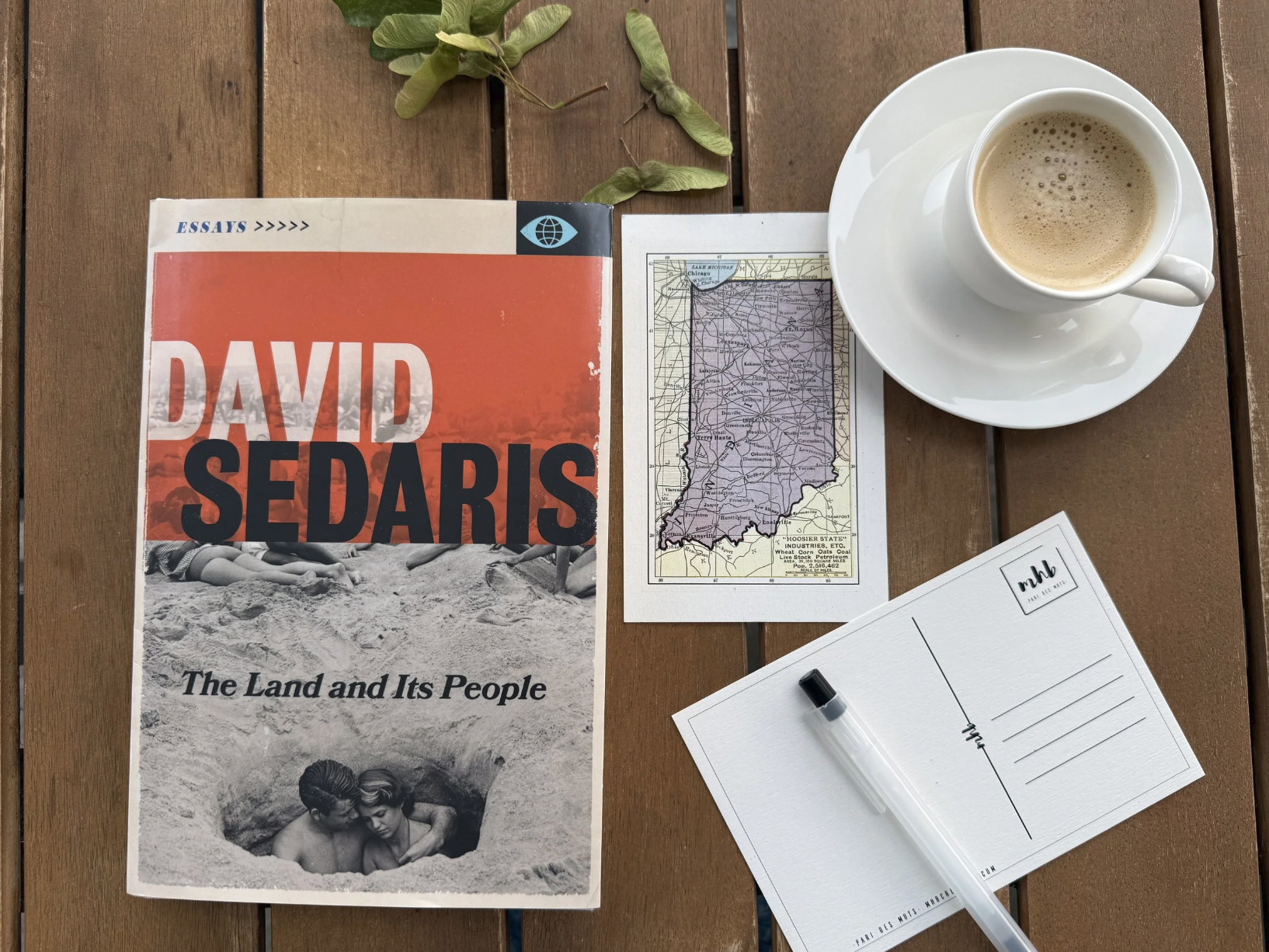
A Land and Its People

If you enjoy David Sedaris, then you will love his new book. I think that he gets more curmudgeonly with age. But also, somehow more of a softy? Or maybe he’s just a more concentrated version of himself. Like a gay Larry David. As far as I can tell, that’s the aging process in a nutshell.

Separately, I really love postcards.

Read More
book-ish, Food and Bev Laurie Mucha book-ish, Food and Bev Laurie Mucha

Cookbook research

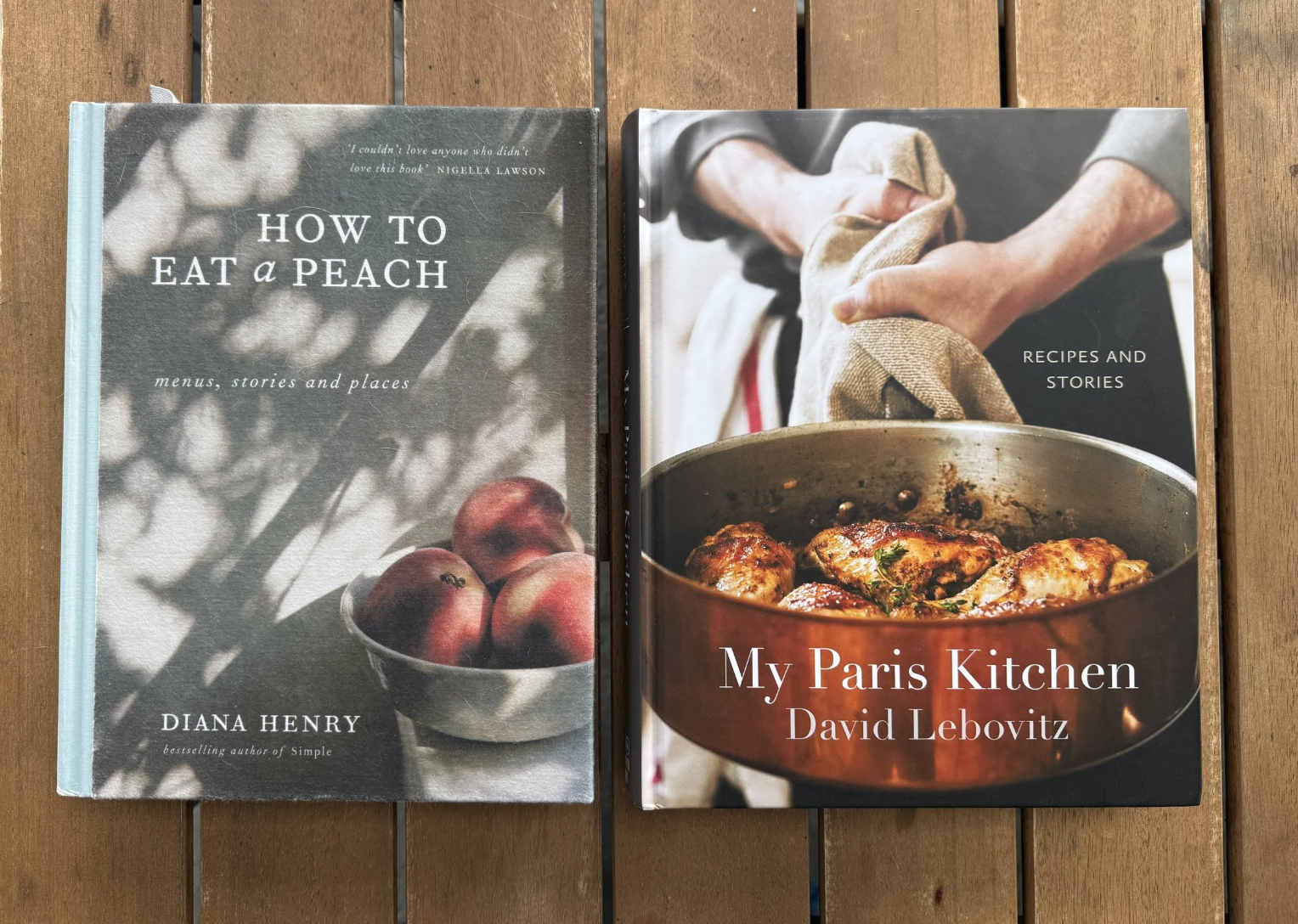
I’m flirting with idea of writing a Lake Annecy cookbook... Here are a few of my early comps!

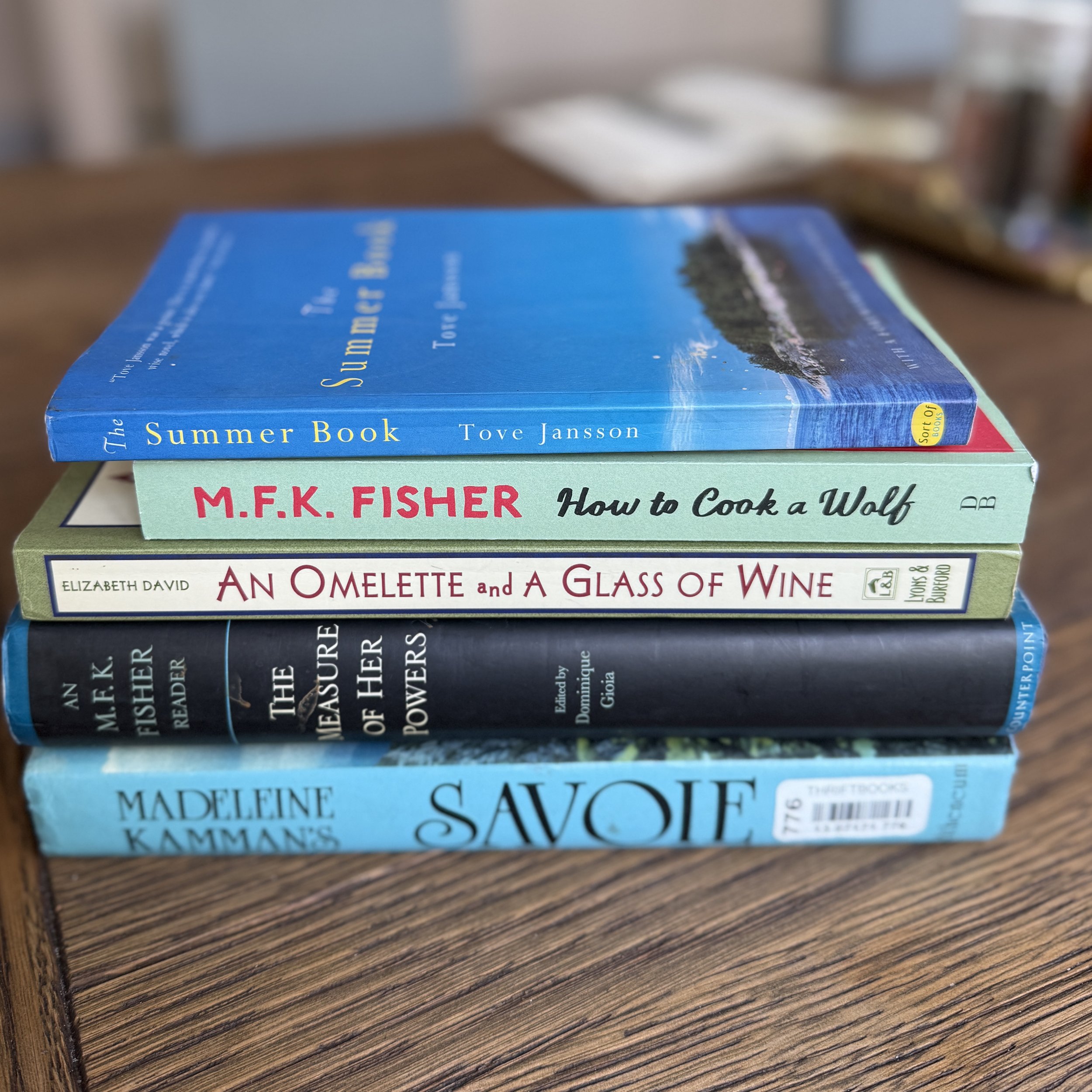
1) How to Eat a Peach by Diana Henry 2) My Paris Kitchen by David Leovitz

1) No-Recipe Recipes by Sam Sifton 2) Savoie by Madeleine Kamman

  • How to Eat a Peach by Diana Henry - My God, I love her writing and visual style. The book itself is fuzzy… like a peach. Such a beautiful book.

  • My Paris Kitchen by David Leobvitz - This book is as much about Paris as it is about the recipes. That’s what I want to do for Lake Annecy.

  • No-Recipe Recipes by Sam Sifton - this is how I write recipes. More like a list of ideas and suggestions - not a tedious instruction manual.

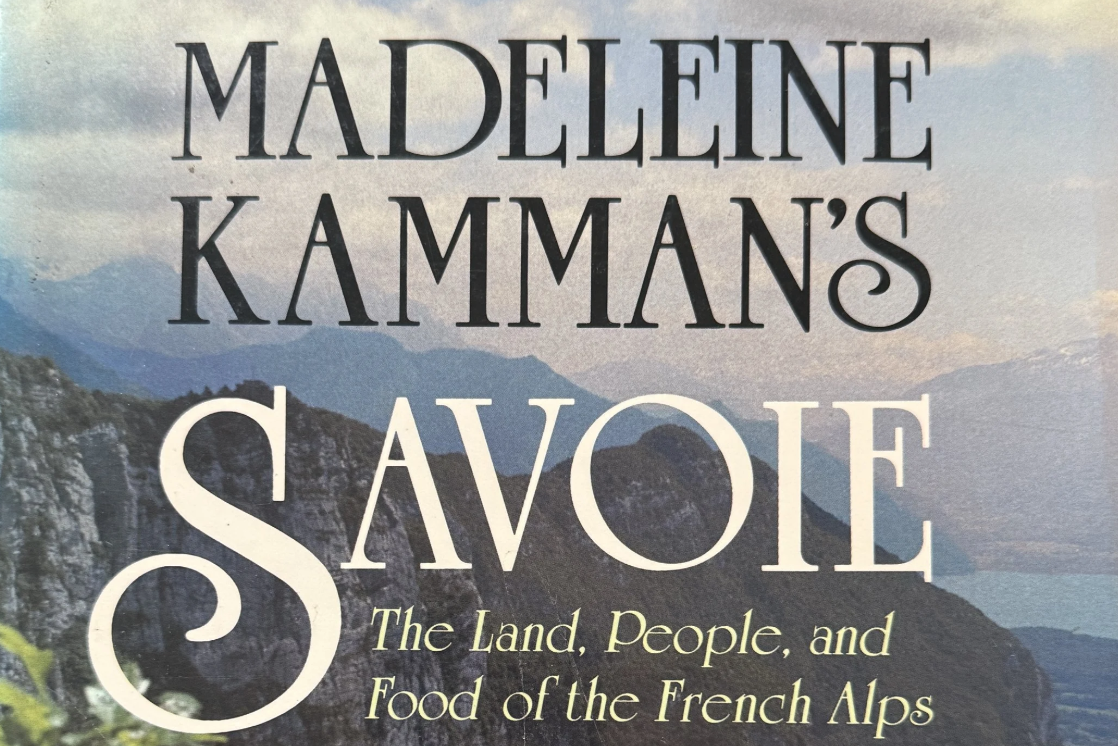
  • Savoie by Madeleine Kamman - The only English language cookbook I could find that is focused on this region. And it’s out of print! But I managed to procure a copy of World of Books. :)

Read More
book-ish, Life and Travel Laurie Mucha book-ish, Life and Travel Laurie Mucha

A little bookshop in Annecy (since 1731)

1) Camille Claudel, scultprice, 1864 - 9143, 2) Librairie Le Vieil Annecy, 3) record player in the middle of the store, playing classical music.


You know that scene in Pretty Woman when Julia Roberts goes into the fancy boutique in Beverly Hills and is dismissed by the rude staff? That’s how I imagined it going when I entered this bookshop.

Librairie Le Vieil Annecy has been open, more or less, since 1731. They only sell French books, so I assumed I’d be shooed out the door as soon as they smelled the American on me.

But that didn’t happen! The manager, Mr. Pierre, was so kind and generous with his time and knowledge of books - a true booklover at heart. He let me browse for an hour - and when I became fixated on a portrait hanging on the wall, he gave me an art history lesson on the life and times of Camille Claudel.

I enjoyed our conversation so much that I might just become his penpal.

Read More
book-ish Laurie Mucha book-ish Laurie Mucha

All the books I picked up at the airport when my flight was delayed five and a half hours

I started listening to Homebound by Portia Elan and was immediately hooked. Love it so far! I also started reading David Sedaris’s new book, The Land and Its People.

Read More
Life and Travel, book-ish Laurie Mucha Life and Travel, book-ish Laurie Mucha

Hosting my first mini-retreat

Yesterday I hosted my first mini-retreat! We were seven women total - from France, Switzerland and the UK. 

We used the GROW framework to workshop each person’s business challenges. Our goals: to create community and to encourage each other to make progress on our biggest job/career challenges. 

Some reoccuring themes: 

  • Being intentional about career and life choices

  • How to find/create work that aligns with personal values

  • Figuring out how to charge more while remaining accessible

I received some really positive and constructive feedback. With a few tweeks, I’d love to do something like this again in the future!

Read More
book-ish, Life and Travel Laurie Mucha book-ish, Life and Travel Laurie Mucha

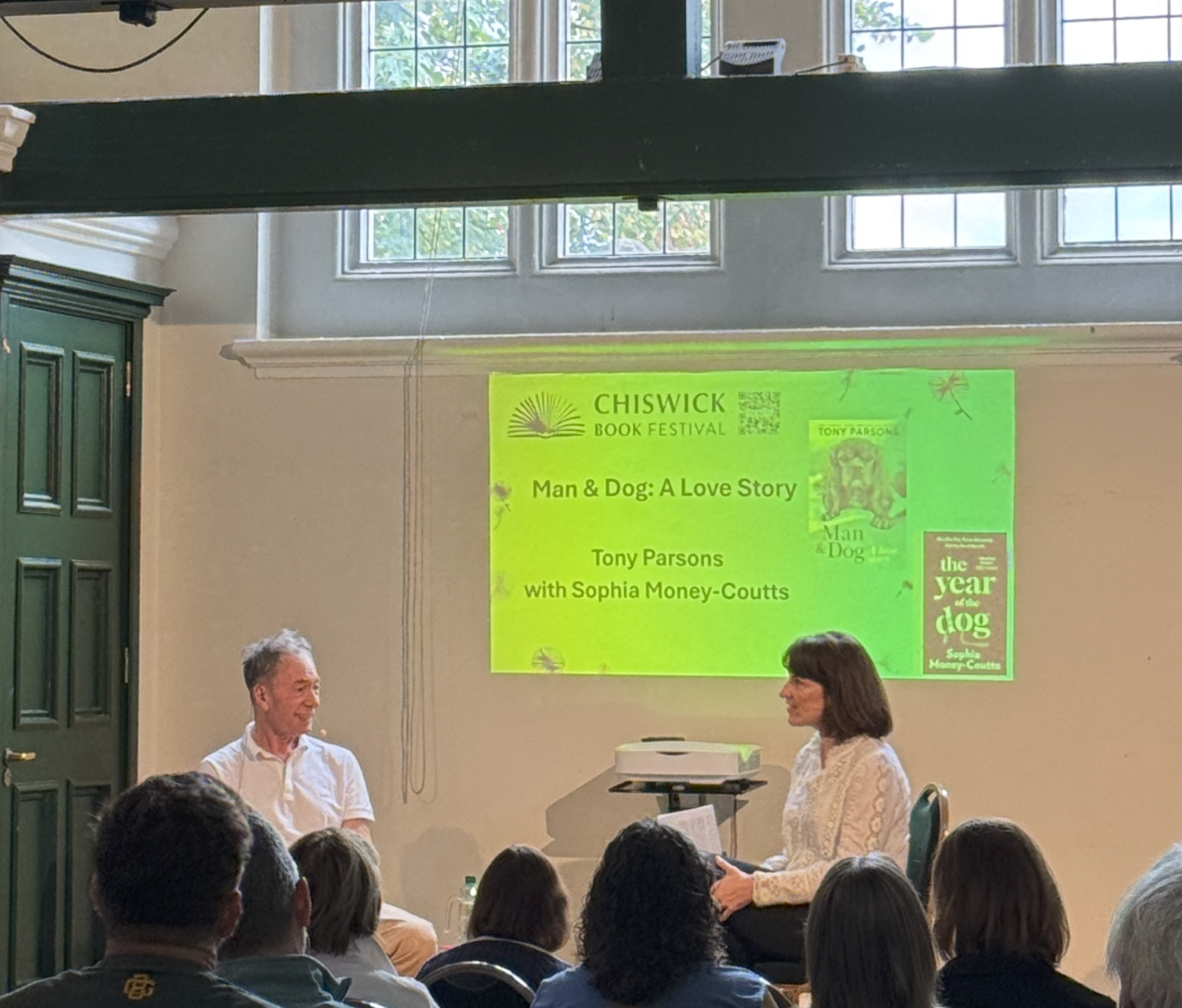
On meeting Ruth Ozeki

I met Ruth Ozeki!!!!

She is hands down one of my favourite authors. Never mind the fact that no one I know has ever heard of her, and that I had four tickets to the event and could find NO one to go with me except my daughter, who went primarily because she felt sorry for me.

For the record, I would’ve been absolutely fine going alone - but in the end I'm glad she came, because she convinced me to get my book signed. When it was my turn, I COMPLETELY FROZE and Sophia had to jump in and say "This is my mom, she's a writer and she loves you so much."

And Ruth was so gracious and sweet and said nice things. At which point, encouraged, I said something like "I became a yoga teacher because you're a Zen Buddhist priest." (what?!?!) And she responded as if ours was the most natural conversation in the world. Bless her.

Some craft tidbits from her talk:

  • Her Zen practice helps her write from the brain and the body of her characters — she can drop into a meditative state and experience the scene from her character's perspective.

  • Her eye as a filmmaker helps her figure out from which perspective to tell the story.

  • Her experience as a film editor taught her how to move a story along quickly.

  • Assume you and your reader are on the same wavelength. You don't need to over-explain.

Thanks for visiting London, Ruth. xoxo

London’s Southbank on a summer night is magical. Food stalls, lights, music, dancing - it's such a great scene. And not just for young people! People my age were leaving the BFI and the Literary Festival and getting caught up in the energy. I didn't dance exactly, but I wiggled my hips.

Read More
book-ish Laurie Mucha book-ish Laurie Mucha

Thoughts on Thoreau’s cabin in the woods.

Thoughts on Thoreau’s cabin in the woods.

Chiswick House and Gardens

Dearest writing friend, 

I learned something new today, do you have a minute? 

It’s about this (romanticized) notion of a cabin in the woods (i.e. Henry David Thoreau). An isolated, quiet place where one can do creative work, uninterrupted. A place to simplify, to strip back and, above all else, be alone long enough to hear ourselves think and write.

Thoreau’s cabin in the woods was indeed a rich source of inspiration for him. He spent many hours contemplating nature and enjoying his solitude. And.

He walked into town nearly every day, often to have dinner at his mother's house and to pick up his laundry (which she did for him, so he could simplify, simplify).

He entertained frequently at the cabin — friends, neighbors, and admirers dropped by regularly. At one point he mentions having 25 or 30 visitors at once. But more often, his mother and sisters would stop by to bring him pies, doughnuts and meals.

He was never truly alone in the woods. The railroad ran nearby, he could hear the sounds of Concord, and the pond itself was a popular swimming spot. 

Hilariously, Thoreau’s opus, Walden is, at its core, a manifesto about stripping life down to essentials and depending on no one but yourself. But it’s worth noting that the man urging you to simplify, simplify had women preparing his meals and doing his laundry. 

I say all this, not to remind you of the unpaid work of women, but to remind myself that I only need a few hours every day to come back to creative work. 

And that it’s perfectly wonderful if my cabin is in fact, only a tiny desk in the corner and a pair of noise cancelling headphones. In fact, that’s more than enough. Who can write more than two hours a day anyway? 

xo, L

Read More
book-ish Laurie Mucha book-ish Laurie Mucha

Books of March

This book sounds bleak, I know! But it’s a super fast, interesting read.

Hello friend,

I only managed to finish one book this month. For some reason I’ve had a hard time concentrating lately. I wasn’t even particularly busy, just restless.

That said, I finished one book and I loved it. It’s called I Who Have Never Known Men by Jacqueline Harpman. Here’s the Amazon blurb because I’m too lazy to say anything different: 

Deep underground, thirty-nine women are kept in isolation in a cage. Above ground, a world awaits. Has it been abandoned? Devastated by a virus?

Watched over by guards, the women have no memory of how they got there, no notion of time, and only vague recollection of their lives before. But, as the burn of electric light merges day into night and numberless years pass, a young girl - the fortieth prisoner - sits alone an outcast in the corner.

Soon she will show herself to be the key to the others' escape and survival in the strange world that awaits them above ground. The woman who will never know men.

It sounds bleak, I know! But it’s a super fast, interesting read.

Here are the books that I started but did not finish: 

  • Theo of Golden by Allen Levi - too sweet

  • Moderation by Elaine Castillo - too grim

  • The Brain at Rest: How the Art and Science of Doing Nothing Can Improve Your Life by Joseph Jebelli - message received by chapter three. I decided to rest instead of finishing the book.

  • Bhagavad Gita - I was supposed to read this for Yoga Teacher Training - I found it insufferable and could not finish. I watched some youtube videos on the topic instead.

The Indiana girl in me wants the above authors to know that my inability to get through your books says nothing about their worthiness. I was just in a mood. 

OH! I forgot to mention. I’m also about halfway through 11.22.63 by Stephen King. It’s roughly five million pages long so if I manage to finish it, I’ll let you know.

xo, L

Read More
book-ish Laurie Mucha book-ish Laurie Mucha

Indie Author Lab, London

Key Takeaways from Jo Penn’s talk at the Indie Author Lab, London.

Jo Penn at the Indie Author Lab, London

I have no good reason to go to literary events, except that I just love them!

I love meeting other writers and buying their books. I love learning about emerging technologies and literary trends… And I love listening to how the most profitable writers run their business. 

Joanna Penn is one of my favourites. I’ve never read her fiction books, but her podcast is super interesting. Here are some key takeaways from her talk this week:

1. What do you really, actually want [from your writing]? 

2. What do you need to do to get that? 

3. What are you doing instead? 

4. Stop doing that! 

In other words, (talking to myself here), are you SURE you want to run an author business? Because if so, you’ll need to do a million things you don’t really want to do. Namely, build an email list, grow social media, implement a marketing and promotions strategy and on and on and on until the end of time.

Or, you could just write books for the love of it. Because it’s fun.

xo, L

Read More
book-ish, Life and Travel Laurie Mucha book-ish, Life and Travel Laurie Mucha

Keats House, London.

Yoga and Writing Workshop at Keats House, London.

just a little journaling

A Yoga and Writing Workshop

-

Read More
book-ish Laurie Mucha book-ish Laurie Mucha

Books Read in February

Five book covers arranged on a light grey background: The Names by Florence Knapp, Strangers by Belle Burden, Less by Andrew Sean Greer, How Yoga Works by Geshe Michael Roach, and Still Writing by Dani Shapiro.

Books I read in February 2026

The Names by Florence Knapp

The book opens in 1987 as a woman is choosing a name for her newborn son. She wants to call him Julian. Her daughter wants to call him Bear. Her abusive husband insists on Gordon — after himself. From the day the name is chosen, the novel revisits the boy every seven years to trace how a single word shapes an entire life. I'm not quite finished yet but I'm absolutely riveted. If you like quietly devastating literary fiction that plays with fate and identity, this one will get under your skin. Loving it!

Strangers: A Memoir of Marriage by Belle Burden

A memoir about a woman's marriage — what she thought it was, what it actually was — told in the aftermath of having the rug pulled out from under her. It reads like a juicy Vanity Fair article, and it sparked some controversy because of exactly how much she was willing to say.

Well, you know what Anne Lamott would say, right? "You own everything that happened to you. Tell your stories. If people wanted you to write warmly about them, they should have behaved better."

Less by Andrew Sean Greer

Arthur Less is a mid-list novelist who, to avoid his ex's wedding, books himself a round-the-world tour of literary events that any author of repute would turn down. I’m a total sucker for a novel about a novelist, and this one is great. The globetrotting adventures make for a story that’s fun, fast, and surprisingly tender. Read it if you like novels about writers - but I have a feeling I might forget I read this book by the end of the year.

How Yoga Works by Geshe Michael Roach

A parable about the living the philosophy of yoga, so that you don’t actually have to read The Yoga Sutras of Patanjali. This was required reading for my yoga teacher training and… well, it does what it says on the tin. If you're a yoga practitioner who wants to understand the deeper philosophy without your eyes glazing over, this is your book.

Still Writing by Dani Shapiro

Part memoir, part craft guide, this is Dani Shapiro's love letter to the writing life. I have a stack of creativity books that I look at whenever I’m in need of inspiration or understanding - this will go on the shelf (see my Creativity Bookshelf on Goodreads). And as it turns out, Shapiro has a serious yoga and meditation practice which she weaves through the book in the most wonderful way. It’s a must read if you are a writer. But if you aren’t, then it’s probably not your thing.

Read More
book-ish, Life and Travel Laurie Mucha book-ish, Life and Travel Laurie Mucha

Gertrude Stein, Salons, and the Women in the Kitchen

A packed evening event at the London Library, three speakers seated before a floor-to-ceiling wall of books as an audience listens.

Art/Lit Salon at The London Library

I went to a wonderful event at the London Library the other night — an Art/Lit salon devoted to the life and work of Gertrude Stein. 

As you probably know, Stein was an American woman who went to Paris, declared herself an eccentric genius and then proceeded to act like one. Her salons were notoriously not for everyone.  Even her closest friends (Picasso, Cezanne, Matisse) found her exceedingly difficult. 

Recreation of Gertrude Stein's Paris salon at 27 rue de Fleurus, its walls covered floor-to-ceiling with modernist paintings including works by Picasso and Cézanne.

Salon de Fleurus is an artwork, a contemporary reconstruction of Gertrude Stein’s Parisian salon that existed at 27 rue de Fleurus from 1904-34.

Here’s the part of the story that always rubs me the wrong way. While Stein held court in the salon, her partner, Alice B Toklas entertained the wives in the kitchen. 

Which is strange because Toklas was Stein’s editor, manager and literary advocate. She was absolutely essential to Stein’s intellectual life and social network. 

So why did Toklas so readily “keep the wives occupied” while Stein conversed with the writers and artists in the other room? 

I’d love to go back in time and pull those women out of the kitchen and sit them down. What did they think about all this? 

Black and white photograph of Gertrude Stein in the foreground, hands behind her back, with Alice B. Toklas standing smaller in the background — the composition saying everything the post is about.

The woman behind the woman. Cecil Beaton Archive / Condé Nast

Meanwhile, in New York City….

A different movement was afoot. Female artists, writers and patrons were founding what would become some of the world’s most celebrated institutions. MoMA was founded by Abby Aldrich Rockefeller, the Whitney by Gertrude Vanderbilt Whitney, and the Guggenheim by Hilla von Rebay. 

And then there was Florine Stettheimer: An artist who hosted salons in her apartment on the Upper West Side of Manhattan - and encouraged creative exchange between artists of all genders. 

Florine Stettheimer - Studio Party (Soirée)

Some women waited to be invited into the room. Others built the room.

P.S. For when I have time for a deep dive…

Two books on a wooden table: "Gertrude Stein: An Afterlife" by Francesca Wade, and "The Autobiography of Alice B. Toklas" illustrated by Maira Kalman.

"Gertrude Stein: An Afterlife" by Francesca Wade, and "The Autobiography of Alice B. Toklas" by Gertrude Stein and illustrated by Maira Kalman.

Read More
book-ish Laurie Mucha book-ish Laurie Mucha

She Called it Channelling

At last night's salon, we got to talking about female artists who quietly fueled their husbands' genius — and this morning I fell so far down a rabbit hole I barely made it out in time for dinner.

Let me tell you a story.

It's October 1917. Georgie Hyde-Lees (25) has just married W.B. Yeats (52) who is - embarrassingly - still pining for another woman. In fact, two other women. He'd proposed to Maud Gonne (his great obsession) and she rejected him. Then he immediately proposed to Maud's daughter Iseult (eww) who also rejected him. And then finally, in fit of romantic desperation, he marries Georgie. But on their honeymoon, in a Sussex forest hotel, he is still freaking out, brooding and writing letters to Iseult. Georgie can see exactly what's happening and decides to do something about it.

Black and white portraits side by side: Maud Gonne in Victorian dress, and Georgie Hyde-Lees seated beside W.B. Yeats, circa 1917.

I mean, the guy had a type. Left, Maud Gonne - Right, Georgie and W.B. Yeats. Not shown: Iseult Gonne, Maud’s daughter (eww).

So, what does Georgie do?

Four days into this honeymoon from hell, she picks up a pencil and begins to write automatically - meaning, she began channelling spirits and dictating what they told her. (It was a thing back then. Georgie’s good friend - who was the wife of Arthur Conan Doyle - also had this talent.)

Georgie’s idea was to fake a sentence or two that would get her husband to calm down and be a decent human being. The first message went something like "What you have done is right for both the cat and the hare" - the cat being Georgie, the hare being Iseult. Yeats was immediately captivated and evidently soothed by this wisdom.

Georgie later told a friend that she had planned to own up to her little ruse, but it had worked so well that she decided ah well, what’s the harm? ... (New York Review of Books)

Sepia photograph of Ashdown Forest Hotel, Sussex, England, early 20th century — the hotel where Georgie Yeats began her automatic writing sessions.

Ashdown Forest Hotel, wherein the honeymoon suite, Georgie begins automatic writing / saving her marriage.

Couples counselling + metaphors for poetry

In their first three years together, the couple averaged three automatic writing sessions a week, creating 4,000 pages of material. The spirits - who had names like Thomas of Dorlowicz, Ameritus, Leaf, and Apple - handed over poetry and story ideas. But they were also quite practical! They suggested Yeats switch to a healthier diet, hinted when Georgie was ovulating so the couple could have a baby and even offered helpful suggestions on how Yeats could make sex more enjoyable for Georgie. (How much do you love this woman?)

Eventually the writing became speaking. Georgie would sink into a half-sleep (the hypnagogic state) and the spirits would speak: different ones at different times. And all of it became the raw material for A Vision, Yeats's great mystical work. When the spirits were asked what their purpose was, they said: "We have come to give you metaphors for poetry."

Black and white oval family portrait of W.B. Yeats seated with Georgie standing behind him, flanked by their two children.

Yeats family portrait

Was she faking it? 

Almost certainly she started out performing, but scholars think she fairly quickly entered into something she couldn't entirely explain herself. As time passed, the script became more legible, structured, and comprehensible, and this has caused many critics to wonder just how "automatic" the script really was. The answer seems to be: both. She was a highly intelligent woman working at the edge of her own unconscious, in genuine collaboration with her husband.

Two pages side by side: George Yeats's automatic script dated 5 November 1917, dense with flowing handwriting, alongside a mystical ink drawing featuring birds, trees, and symbolic figures from the spirit sessions.

Notes from Georgie’s spirit guides.

In the end…

Georgie outlived Yeats by 30 years. After his death, she took up A Vision and edited it for immediate republication - correcting, shaping, controlling the legacy. She spent the rest of her life deciding who got access to his papers and who didn't. She bequeathed W.B. Yeats's manuscripts and papers to the Irish nation.

Oil painting portrait of George Yeats by William Rothenstein, 1918. She is seated, wearing a teal dress against a gold background, her expression calm and self-possessed.

“Portrait of George Yeats” painted by William Rothenstein (1918)

What do I think?

I think this is a story about a woman who gave her creative gifts to a man and called it channelling. Whether she believed it or not, she clearly had extraordinary imaginative and intuitive powers - and the only way she could express them, in that marriage, in that era, was as a medium. The spirits were her.

Or at least, of her.

Read More
book-ish Laurie Mucha book-ish Laurie Mucha

Women's Prize Nonfiction Longlist 2026: Three Books I'm Watching

Women's Prize Nonfiction Longlist 2026 - The Finest Hotel in Kabul, Daughters of the Bamboo Grove, Indignity

I love the Women's Prize. I attend their summer events, I've been a patron, and I try to read the shortlists for both fiction and nonfiction.

They just announced their Longlist for Nonfiction, which is a relatively new category for them. I’ve got my eye on these three :

  • The Finest Hotel in Kabul by Lyse Doucet - if you don’t know her by name, you’d know her voice and face. Along with Christiane Amanpour, Doucet is one of the world's most prominent and respected international correspondents. I met her at a party once and we discussed cheese.

  • Daughters of the Bamboo Grove by Barbara Demick - another book from another foreign correspondent. It’s almost like we need independent journalism to shed light on stories around the world. Who would’ve thought?

  • Indignity by Lea Ypi - I enjoyed Ypi’s first book, Free (a memoir of coming of age amid political upheaval in Albania), so I’m willing to give her second book a try.

You can find the entire longlist - and learn more about the Women’s Prize - here.

Read More
book-ish Laurie Mucha book-ish Laurie Mucha

Broken Country by Clare Leslie Hall

With huge Book Club buzz and rave reviews, I really wanted to love this. While the pacing lagged and the characters didn’t fully land for me, its devoted fanbase suggests it may hit differently for you.

Despite the Reece's Book Club buzz, I found this to be just meh.

I picked it up because it’s described as having the pace of a thriller and the emotional depth of a romance…. But I think the thriller description is a bit of a stretch. The plot/pacing doesn’t really pick up until the last 1/4 of the book. 

And as far as the emotional depth of the romance? I didn’t really connect with the main character and found her husband to be one-dimensional.

But hey! Over 200K people have given it 5 stars! So you might love it. You do you. 

Read More
book-ish Laurie Mucha book-ish Laurie Mucha

The Book of Alchemy by Saleika Jaouad

If you like the idea of journaling but don’t know where to start, this book is a gentle companion. With short, thoughtful essays and optional prompts, it offers inspiration without rules or pressure.

Book cover of The Book of Alchemy by Suleika Jaouad with colorful abstract artwork.

A thoughtful, inviting book for anyone who journals—or wants to, but doesn’t know where to start.

Organized around themes like fear, love, and memory, it gathers short, honest reflections from over 100 voices, reminding us we don’t have to be “real writers” to write.

The essays are the real gift here—thought-provoking and grounding—while the prompts are there if you want them (and easy to skip if you don’t).

If you’re a writer or artist - you’ll love this book!

Letting my hand catch up with my intuition has yielded some of the most unexpected insights.
— Suleika Jaouad
Read More
book-ish Laurie Mucha book-ish Laurie Mucha

The Artist

My 3-line (ish) book review:

A quiet, atmospheric novel set in 1920s Provence, exploring the cost of creativity and the pursuit of art.

It's a slow-burn kind of read: cinematic and slightly ominous.

Did I like it? hmm… I appreciated it. It was well written and insightful. It’s objectively a good book - but I think I was in the mood for something more escapist.

The Artist by Lucy Steeds, bookcover

My 3-line (ish) book review:

A quiet, atmospheric novel set in 1920s Provence, exploring the cost of creativity and the pursuit of art.

It's a slow-burn kind of read: cinematic and slightly ominous.

Did I like it? hmm… I appreciated it. It was well written and evocative of time and place. It’s objectively a good book - but I think I was in the mood for something more escapist. This book is almost claustrophobic in its depiction of living in that house.

Read More
book-ish Laurie Mucha book-ish Laurie Mucha

Everything is Tuberculosis

My 3-line book review: A beautiful, accessible blend of personal story, social history and medical ethics. 

If you enjoyed The Immortal Life of Henrietta Lacks, this book is right up your alley.

Here’s hoping John Green’s work will shine a light on a disease that could be eradicated - if we collectively decided to make it so. 

Cover of Everything Is Tuberculosis by John Green, featuring a yellow background with bold black text and a central red circle over a teal triangle.

My 3-line book review:

A beautiful, accessible blend of personal story, social history and medical ethics. 

If you enjoyed The Immortal Life of Henrietta Lacks, this book is right up your alley!

Here’s hoping John Green’s work will shine a light on a disease that could be eradicated - if we collectively decided to make it so. 

Read More
book-ish Laurie Mucha book-ish Laurie Mucha

My Favourite Books of 2025

My favourite books of the year - featuring literary fiction, memoir, and food writing - plus a three-line book review for each.

A collage titled “My Favourite Books of 2025” showing several fiction and nonfiction book covers arranged in a grid.

A Fine Balance by Rohinton Mistry

Of all the books I read about India, this one was my favourite! Set in 1970s India, four people from vastly different backgrounds find their lives intersecting in a city dominated by political violence and poverty. I loved how the book slowly reveals an interconnected social web, turning an unfamiliar history into a story that was intimate, fragile, and deeply human. If you enjoy historical fiction—or are interested in India—you should absolutely read this!

The Silence in Between by Josie Ferguson

Spanning WWII Germany and Cold War Berlin, this novel follows a mother and daughter whose lives are divided by war, music, and eventually the Berlin Wall. I’m a sucker for dual-timeline historical fiction, and this book takes the genre to a whole new level. Gorgeous writing - and the musical elements are to die for.  If you read a lot of WW2 fiction and/or love novels about resilient women - this book is for you. I’m jealous you get to read it for the first time. 

Heart the Lover by Lily King

Set between an unnamed New England university and Paris, France - the story follows an American woman whose intense love affair fractures her sense of self, ambition, and emotional stability. I love reading about the lives of writers—the pretension! The anxiety! The crushing disappointment! Throw in a steamy love affair and Paris and I’m in. Read this if you liked Writers & Lovers by the same author. (I liked this one better.)

James by Percival Everett

This is a brilliant retelling of The Adventures of Huckleberry Finn from the point of view of enslaved Jim. This novel is outstanding. The first 10% of the book is fine - it establishes us in place/time. But then at about 12% into the book we learn something that reframes everything else that follows. It’s so good. Maybe you’re worried you don’t remember enough of Huckleberry Finn to truly appreciate this book? No need to re-read the whole thing. Ask ChatGPT for a summary and dive into James.

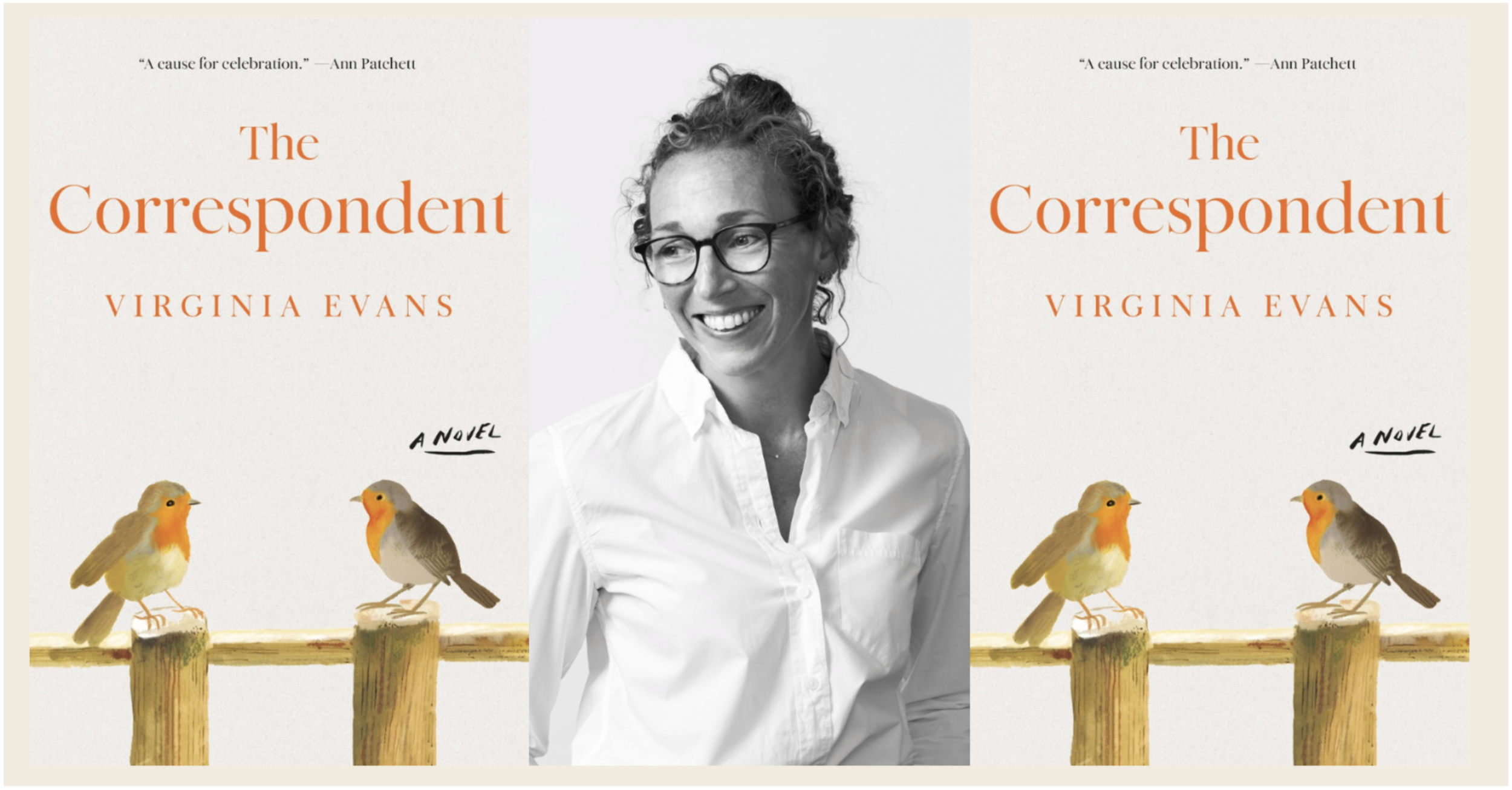
The Correspondent by Virginia Evans

Told entirely through letters, the novel follows an elderly woman in New England whose long life is revealed through decades of correspondence with friends, lovers, and strangers. This was utterly delightful to read! When I finished, I immediately began looking for other epistolary novels to read. Looking for a fast, sweet book? This is it.

The Glassmaker by Tracy Chevalier

Spanning hundreds of years in Venice, the novel centers on a glassmaking family struggling to preserve their art as the world around them changes. I loved the strong female characters (of course) and the way the author plays with time. It’s quite a long novel, so I got the kindle and audible version so I could go back and forth. This helped so much, because the Italian accent on the audio version is beautiful and it makes the story that much more immersive. Read it if you love sweeping historical novels. Did you read The Girl with The Pearl Earring? It’s the same author. 

Kitchen Confidential by Anthony Bourdain

Set in the sweaty, lawless kitchens of New York restaurants, the memoir traces Bourdain’s life as a young cook fueled by ambition, addiction, and adrenaline. I’m late to Anthony Bourdain and how sad for me! Because WOW what a voice. He narrates the audible version and it feels like he’s talking directly to you while drinking a beer.  A must-read if you’re a foodie—or if you just love a great, unapologetic voice.


Three daily reader books arranged side by side: A Book of Days by Patti Smith, How to Live an Artful Life by Katy Hessel, and Life Is Meals by James and Kay Salter.

Some books for daily inspiration.

And a Few Daily Readers…

I really got into daily readers this year - books you can read in short, satisfying chunks, without needing deep immersion or long stretches of focus. Here are the three that still live on my desk:

A Book of Days by Patti Smith

A brilliantly idiosyncratic visual book of days. If you loved Just Kids - this feels like a companion piece.

How to Live an Artful Life by Katy Hessel

Artistic inspiration for everyday of the year. If you loved The Story of Art Without Men — or if you’re an artist of any stripe - you’ll love this. 

Life is Meals by James Salter and Kay Salter

I keep coming back to this book, even though the title rubs me the wrong way.  It’s beautifully illustrated and tidy - a little nugget of food knowledge for every day of the year. 


xo, L

p.s. For more book reviews, travel photos and yoga inspiration - sign up for my monthly newsletter here:

Read More
book-ish Laurie Mucha book-ish Laurie Mucha

The End Times

Vintage newspaper collage with the bold headline “The End Times,” styled like an old printed broadsheet.

I just started reading the most unusual and innovative “book” I’ve ever discovered. The End Times is a post-apocalyptic story that unfolds over a series of monthly newspapers. If you live in the US, you can actually get the tabloid-sized papers mailed to you! I’m so jealous. I had to suffice with the digital version, which I printed out to read.

The first paper (installment?) just dropped and it’s a super fun read. It’s written by Benjamin Percy and some other guy named Stephen King.

If you grew up reading your town’s local paper, this will be so nostalgic. Except for the post-apocalyptic part.

Here’s an excerpt:

Read More