She Called it Channelling
At last night's salon, we got to talking about female artists who quietly fueled their husbands' genius — and this morning I fell so far down a rabbit hole I barely made it out in time for dinner.
Let me tell you a story.
It's October 1917. Georgie Hyde-Lees (25) has just married W.B. Yeats (52) who is - embarrassingly - still pining for another woman. In fact, two other women. He'd proposed to Maud Gonne (his great obsession) and she rejected him. Then he immediately proposed to Maud's daughter Iseult (eww) who also rejected him. And then finally, in fit of romantic desperation, he marries Georgie. But on their honeymoon, in a Sussex forest hotel, he is still freaking out, brooding and writing letters to Iseult. Georgie can see exactly what's happening and decides to do something about it.
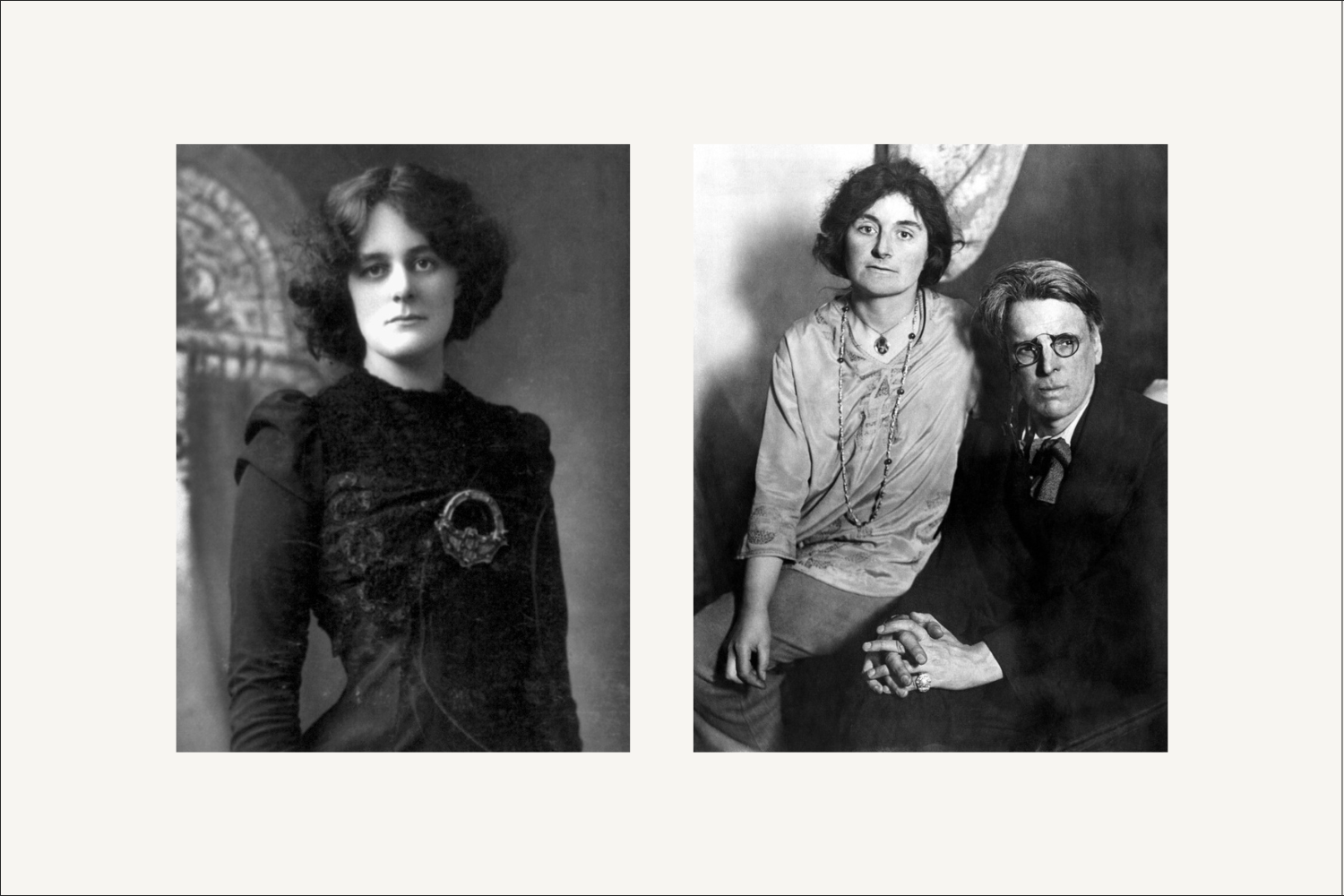
I mean, the guy had a type. Left, Maud Gonne - Right, Georgie and W.B. Yeats. Not shown: Iseult Gonne, Maud’s daughter (eww).
So, what does Georgie do?
Four days into this honeymoon from hell, she picks up a pencil and begins to write automatically - meaning, she began channelling spirits and dictating what they told her. (It was a thing back then. Georgie’s good friend - who was the wife of Arthur Conan Doyle - also had this talent.)
Georgie’s idea was to fake a sentence or two that would get her husband to calm down and be a decent human being. The first message went something like "What you have done is right for both the cat and the hare" - the cat being Georgie, the hare being Iseult. Yeats was immediately captivated and evidently soothed by this wisdom.
Georgie later told a friend that she had planned to own up to her little ruse, but it had worked so well that she decided ah well, what’s the harm? ... (New York Review of Books)
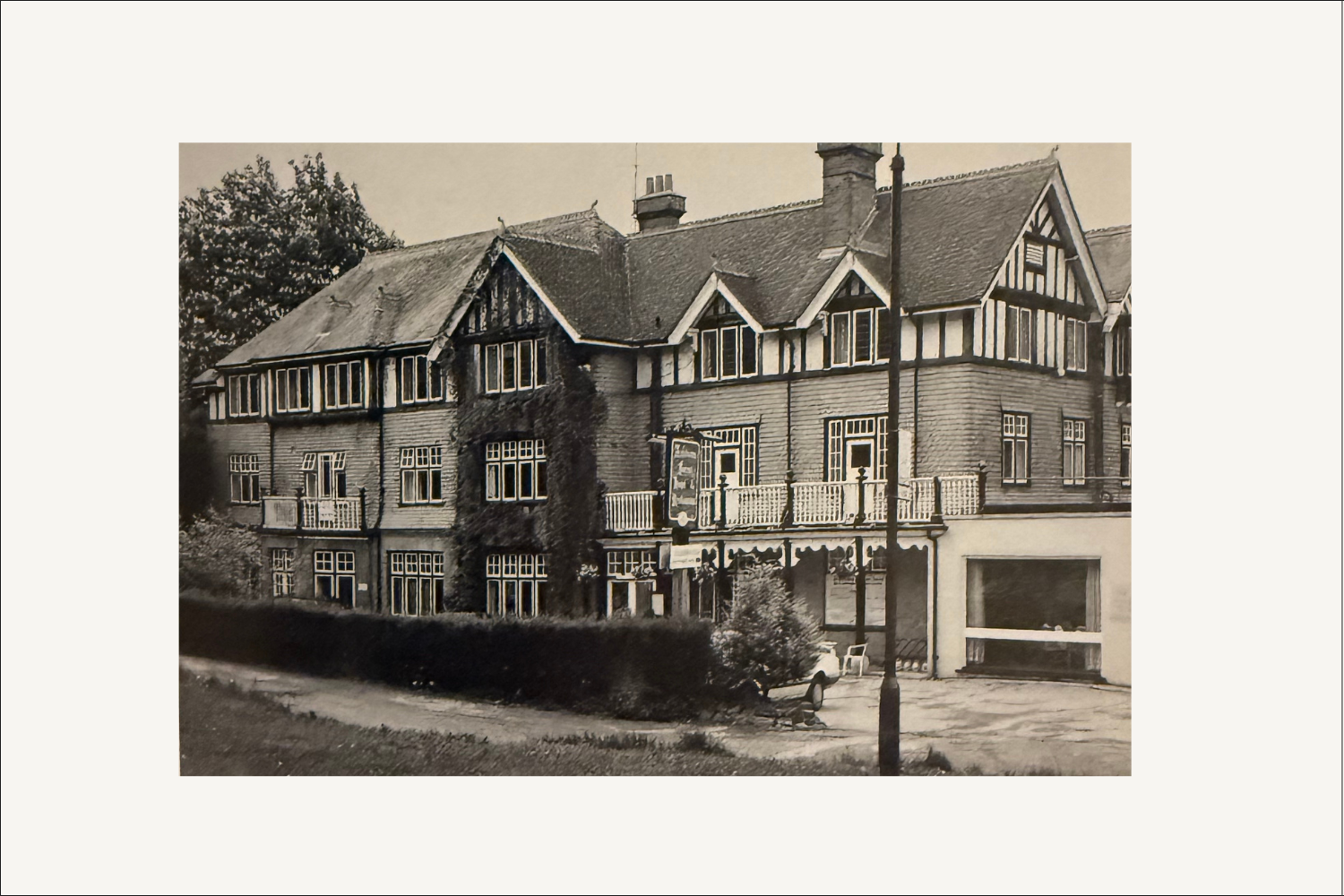
Ashdown Forest Hotel, wherein the honeymoon suite, Georgie begins automatic writing / saving her marriage.
Couples counselling + metaphors for poetry
In their first three years together, the couple averaged three automatic writing sessions a week, creating 4,000 pages of material. The spirits - who had names like Thomas of Dorlowicz, Ameritus, Leaf, and Apple - handed over poetry and story ideas. But they were also quite practical! They suggested Yeats switch to a healthier diet, hinted when Georgie was ovulating so the couple could have a baby and even offered helpful suggestions on how Yeats could make sex more enjoyable for Georgie. (How much do you love this woman?)
Eventually the writing became speaking. Georgie would sink into a half-sleep (the hypnagogic state) and the spirits would speak: different ones at different times. And all of it became the raw material for A Vision, Yeats's great mystical work. When the spirits were asked what their purpose was, they said: "We have come to give you metaphors for poetry."
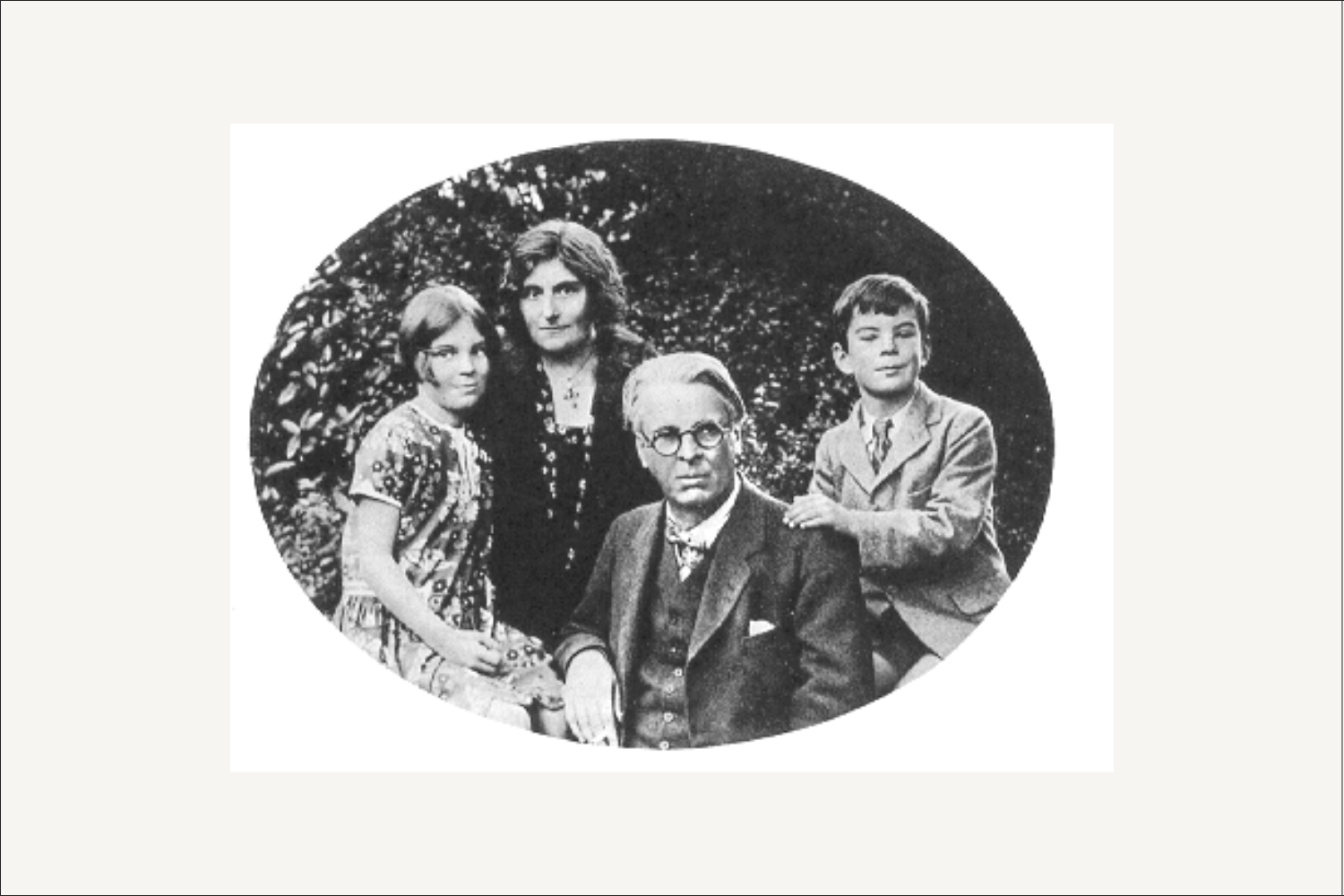
Yeats family portrait
Was she faking it?
Almost certainly she started out performing, but scholars think she fairly quickly entered into something she couldn't entirely explain herself. As time passed, the script became more legible, structured, and comprehensible, and this has caused many critics to wonder just how "automatic" the script really was. The answer seems to be: both. She was a highly intelligent woman working at the edge of her own unconscious, in genuine collaboration with her husband.
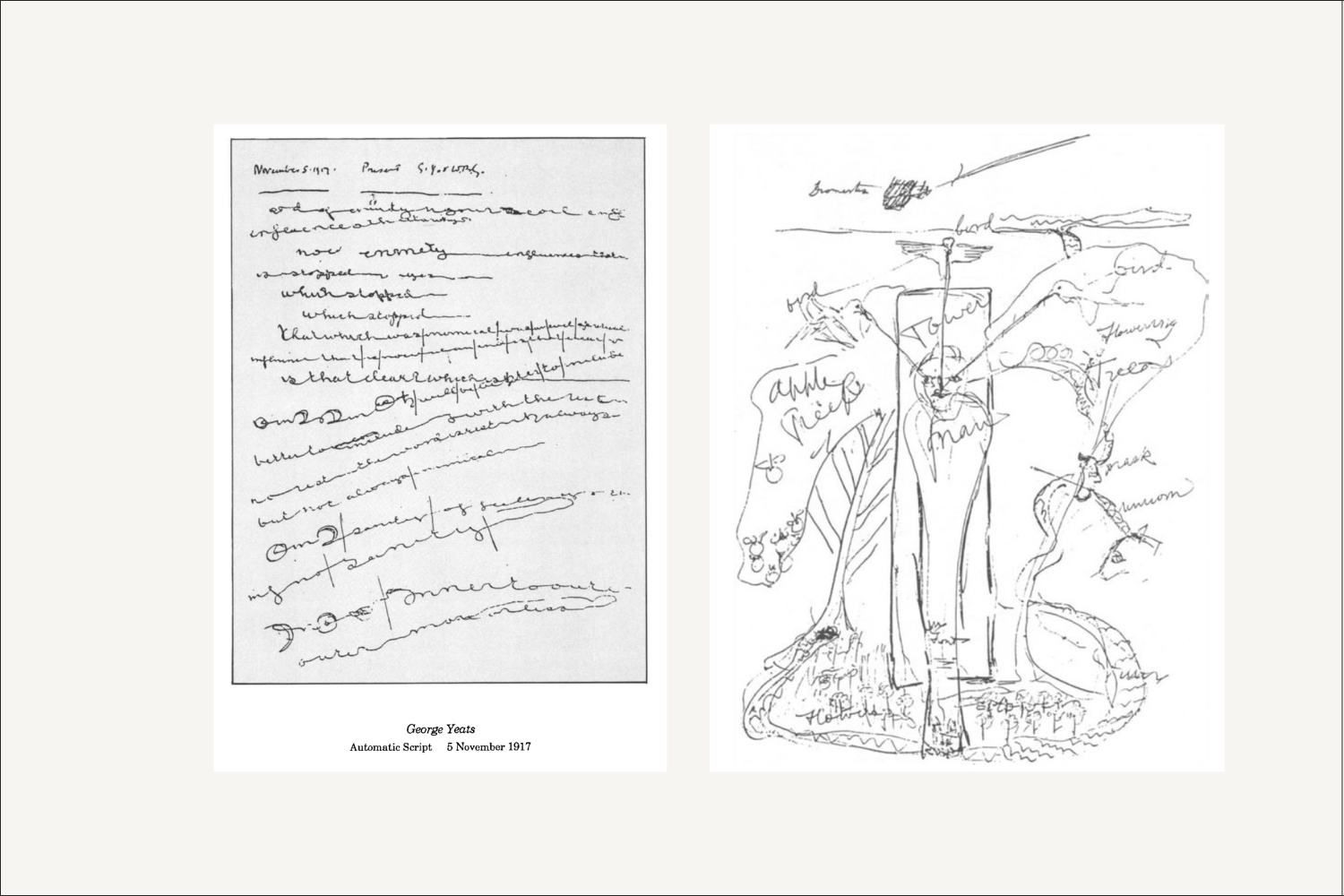
Notes from Georgie’s spirit guides.
In the end…
Georgie outlived Yeats by 30 years. After his death, she took up A Vision and edited it for immediate republication - correcting, shaping, controlling the legacy. She spent the rest of her life deciding who got access to his papers and who didn't. She bequeathed W.B. Yeats's manuscripts and papers to the Irish nation.
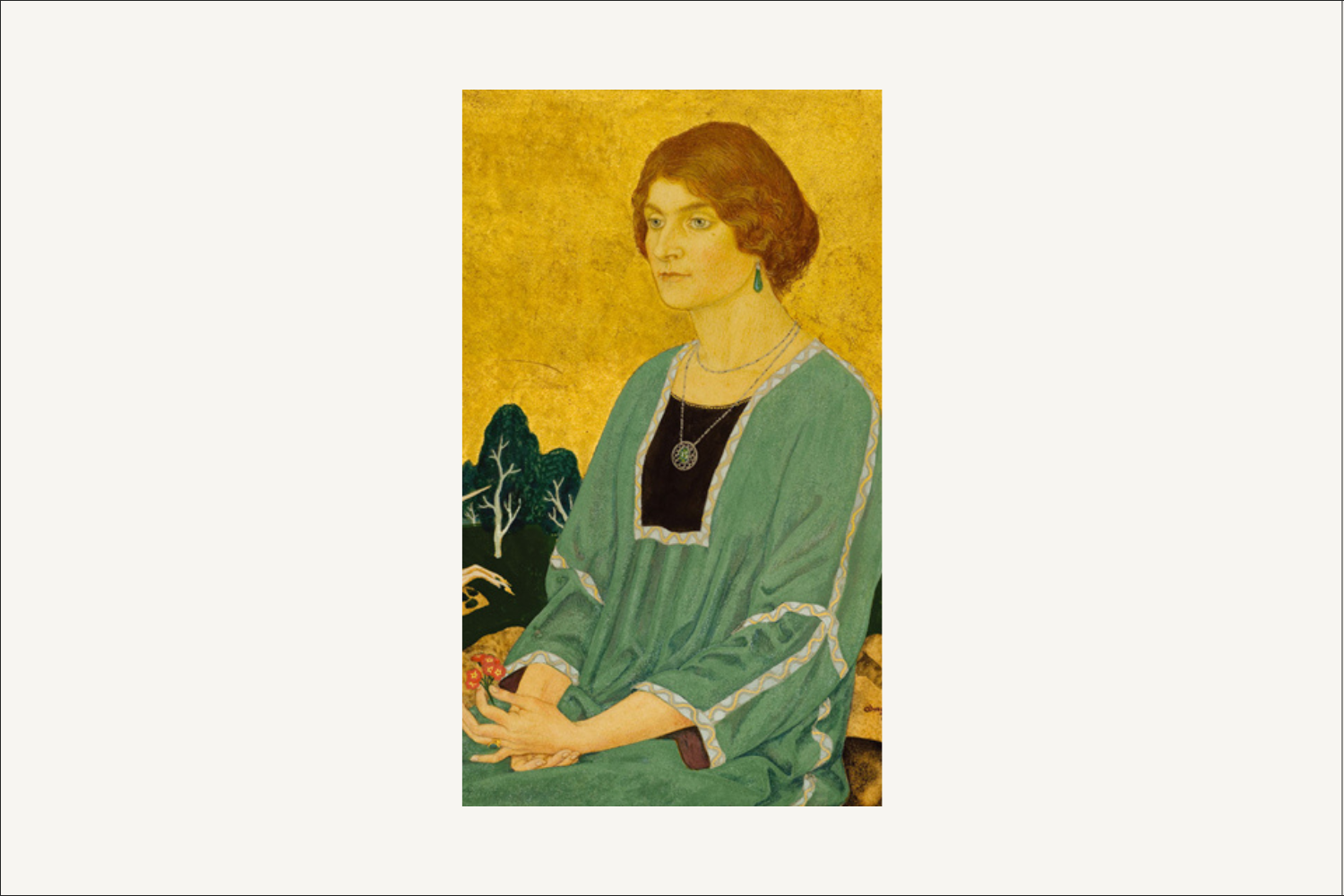
“Portrait of George Yeats” painted by William Rothenstein (1918)
What do I think?
I think this is a story about a woman who gave her creative gifts to a man and called it channelling. Whether she believed it or not, she clearly had extraordinary imaginative and intuitive powers - and the only way she could express them, in that marriage, in that era, was as a medium. The spirits were her.
Or at least, of her.